Hi Reader,
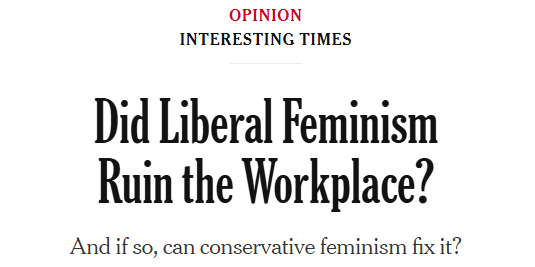
A recent, provocative headline in The New York Times asked if feminism ruined the workplace.
This question is fundamentally flawed. It’s a distraction that points the finger at a group of people instead of at the systems that weren’t built for everyone. It invites us to debate which type of person is problematic, rather than asking the far more useful question: Why do our workplaces still generate so much friction for so many people?
The problem isn’t, and has never been, a specific identity. There is nothing inherently wrong with any gender, race, or background.
The problem is the rigid, narrow, and often unspoken expectations our workplace systems have bolted onto the concept of an ideal employee—expectations that have been unreasonably tied to gender, race, disability status, communication style, and cultural background. For decades, the default operating system for success was based on a very specific archetype—an in-group. This created a set of invisible rules about what a leader looks like, how a leader sounds, and how a leader acts.
This is what I call Leadership Friction.
It’s the invisible, systemic force that creates drag on individuals and organizations. It’s the tax paid by anyone and everyone who doesn’t perfectly align with that default in-group model.
And this friction isn’t just paid by those whose authentic style doesn’t match the default. It’s also paid by those in the in-group who, operating from a different starting point, often can’t see or understand the friction points that are painfully obvious to others. This creates massive organizational blind spots, miscommunication, and inefficiency, where countless hours are wasted managing misalignment that stems from these different, unexamined experiences.
Leadership Friction is the invisible battle a leader from an out-group fights when their confidence is called aggression while the in-group standard is called authoritative. It’s the unrewarded glue work disproportionately shouldered by those expected to be collaborative, work that is critical for team cohesion but mysteriously absent from performance reviews. It’s the constant, exhausting background process of having your competence questioned in ways others are not.
This friction is the real saboteur. The true ruin isn’t that diverse professionals are in the workplace. The ruin is the staggering amount of energy, talent, and innovation we waste navigating this friction.
Think of the sheer volume of brilliance that is lost—not to a lack of skill, but to Environmental Exhaustion. This is the exhaustion that comes from pushing against a system that was simply not built for you. It’s the exhaustion that leads your most indispensable, high-impact Keystone Leaders to a stay or go crossroads, not because they can’t do the job, but because they are tired of paying the friction tax required to do it.
Bringing a diversity of people into the workplace didn’t ruin it. It simply held up a mirror and exposed the systemic friction that was already there, slowing everyone down. The discomfort some feel isn’t from the ruin; it’s from the revelation.
Stop asking if any group ruined the workplace. Start asking how we can finally address the systemic friction that drains our best people. The goal isn’t to fix people to fit the system. The goal is to diagnose the system and equip all leaders with the tools to navigate it, turning that friction into strategic leverage for themselves and their organizations.
That is how you build a workplace that doesn’t just survive, but thrives.
This is a conversation I’m passionate about, and I’ve just posted this article over on LinkedIn to get a wider discussion going.
My question for you is: How much of your team’s energy is spent navigating friction versus doing the work?
I would be honored if you would bring your voice to the public discussion. https://www.linkedin.com/pulse/real-workplace-saboteur-isnt-identity-its-friction-cindy-gross-pcc-2yklf
I’ll also be exploring these themes in person this week (Nov 19-21) at the PASS Data Summit in Seattle. If you’ll be there, please find me at my talk, “I got the role… Now what?”, or at the Community Experts Clinic.
|
🎁 Grab your Dragon Playbook Starter Kit
Start with:
- Culture Compass – Define what you need to thrive in a work culture.
- Boundaries for Thriving – Name, refine, and express values-based boundaries that protect your energy (perfect to use with the AI tool!).
|