Category: Women

  • Coach for Race and Gender Equity (ICF Coaching Week)

    Coach for Race and Gender Equity (ICF Coaching Week)

    PCC, Professional Certified Coach, ICF

    Cindy Gross presented Coaching for Race and Gender Equity as part of ICF International Coaching Week. Grounded in the Cherokee concept of Gadugi—working collectively toward a shared purpose—Cindy explored how coaches can actively disrupt racial and gender inequities. She discussed strategies for helping clients navigate inequitable systems, reducing unintentional harm, and creating lasting systemic change. By fostering psychological safety and inclusion, coaches can support underrepresented voices while challenging white supremacy and patriarchy in workplace dynamics.

    Listen Now

  • Navigating Career Pivots in Midlife with Cindy Gross

    Navigating Career Pivots in Midlife with Cindy Gross

    Cindy Gross Featured on The Roller Coaster of Midlife with Lucie Q

    Cindy Gross joined Lucie Q’s podcast, The Roller Coaster of Midlife, to discuss navigating career pivots, resilience, and embracing change in midlife. In the episode Midlife Pivots with Cindy Gross, she shared her journey—from overcoming workplace challenges to redefining success on her own terms.

    Cindy explored themes of breaking gender stereotypes, setting boundaries, and transforming setbacks into opportunities. Her insights offer inspiration for those looking to reclaim their narrative and step into a more empowered chapter of their lives.

    Listen in to gain practical strategies for navigating career and life transitions with confidence!

    Listen now

  • Cindy Gross on Navigating Tech Careers: Listen Now!

    Cindy Gross on Navigating Tech Careers: Listen Now!

    Lisa Gillette's podcast cover

    Cindy Gross Featured on Lisa’s Podcast: Grace, Grit, Getting it Done!

    Cindy Gross joined Lisa Gillette’s podcast, Grace, Grit, Getting it Done! to discuss empowering women in tech and navigating workplace culture with confidence. In the episode Befriending Dragons: Empowering Women in Tech to Navigate Work Culture with Confidence, Cindy shared insights from her own career in tech and her work as a Women in Tech Leadership Coach.

    She explored key strategies for setting boundaries, claiming opportunities, and owning one’s value in a male-dominated industry. This conversation is a must-listen for anyone looking to thrive professionally while fostering self-assurance and advocacy.

    Catch the episode and gain practical insights into building a fulfilling and impactful career in tech with Cindy’s expert guidance!

    Listen Now

  • Cindy Gross on Inclusive Leadership in Business

    Cindy Gross on Inclusive Leadership in Business

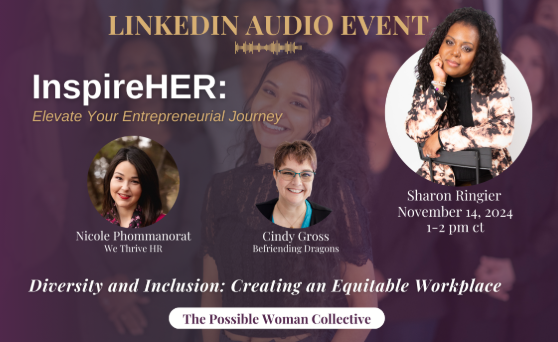
    photo of speakers at InspireHER: Elevate Your Entrepreneurial Journey LinkedIn audio event

    Cindy Gross was a speaker at InspireHER: Elevate Your Entrepreneurial Journey, where she shared insights on inclusive leadership and fostering a workplace culture of belonging and psychological safety. Her approach goes beyond surface-level DEI efforts, helping organizations embed inclusion into their core values. If you’re looking to understand Cindy’s perspective and expertise as a leadership coach, this past event is a great opportunity to listen in and learn more.

  • When Should White People Quote MLK?

    When should white people quote Martin Luther King, Jr.?

    I’ve heard many Black anti-racism advocates say the answer is somewhere between when we deeply understand how to not whitewash his quotes and never, ever, ever. So for any white folks reading this, here’s why we should follow this very reasonable request:

    1. Believe Black people when they tell us we’re harming them.
    2. White people tend to remember, love, and quote the words that let us feel comfortable, safe, and good about ourselves. We can do better and step into discomfort. Stop being performative allies. Move into taking actions that follow the lead of Black people, without forcing them into unwanted or underpaid work, while we white people do the hard work of dismantling the white supremacy we benefit from.
    3. Based on polls at the time, an overwhelming majority of white people absolutely hated MLK – until he was assassinated. Stop taking advantage of our distance from his resistance to whitewash his efforts, to undermine people fighting for justice today. Support Black people however they resist the white supremacy waters we swim in.
    4. There are so, so, so many Black folks out there worth quoting – put some effort into it and learn more about them. We, white people as a whole, are really lazy about learning anything beyond the incredibly whitewashed, male gaze, often totally WRONG history we learned in K-12.

    I know, you want to REMEMBER MLK. By not quoting him people will forget about him. Bullshit. We’re not remembering the whole person, the resistance fighter, the dad, the husband in the way we, white people, quote him now. We’re erasing him and his legacy every time we whitewash his words and twist his message. We’re ignoring all the other Black folks who fought alongside him, all the Black folks who chose, who choose, to fight differently. We’re forgetting them and undermining their efforts. We can be better. Do the work. Listen to Black people. Follow their lead without exhausting them or giving them all the risk. Compensate them for the work they do. Yep, it’s hard. That’s what white supremacy does, it creates friction and rough edges and choppy waters. We as white people need to step into those choppy waters and build our anti-racism muscles, take up our share of the burden of changing the course of the white supremacy river.

    White people have no excuse for saying “I didn’t know” or “I didn’t realize how bad it is” or “This isn’t The American Way.” We choose not to know. We choose to ignore the Black people who have been telling us they are harmed. It’s on us to listen, to stop making Black people perform their pain for us over and over. Accept that white supremacy pervades EVERYTHING and step up to create change within your scope of control. I guarantee you there are things happening at your neighborhood school, your place of worship, your workplace, and your community or hobby groups that uphold white supremacy. I guarantee you there are things you can do, quietly and with no reward or fanfare, which will chip away at that. White supremacy is EVERYWHERE so take any common practice and ask yourself HOW it upholds white supremacy. Ask that same question to get to deeper levels at least 5 times. Validate with Black people, without asking for their free labor or emotional energy, that what you want to do is useful. There are research papers and books and blog posts and YouTube videos of Black people telling you what they need in whatever scope of control you have. Quite possibly there’s an underfunded group or individual already doing that work – give them your money, your resources, your time, the clout that comes with your white privilege. Listen to them and do something about it.

    “…there’s no one way for Black people to combat racism.”

    “White people love to pull the same three MLK quotes out of their ass to try to silence Black people when they are feeling uncomfortable and you are whitewashing MLK’s message and taking his quote completely out of f*cking context to try to serve your purpose.”

    “He did not like you guys.”

    “Martin Luther King is dead. He is not here today because white people did not like him. Because white people use the exact same logic that they use today, on Martin Luther King. Y’all literally assassinated this man.”

    “So do not come back today in 2017 and pretend like you were so supportive of Martin Luther King and that all of these ideologies were so great, was so wonderful, and that’s the right way to do things when ‘the right way to do things’ literally got him murdered.”

    White People Are Banned From MLK – YouTube – Rebekah Hutson OnlyBlackGirl

    “White people love Martin Luther King Jr.

    For them, he is the standard-bearer for resistance while negotiating the minefield of white sensibilities. In the rewriting of history, King has been fashioned into an apologetic freedom fighter who carefully sidestepped white ire while pointing out inequality. They have cunningly backdated their admiration for King and the civil rights movement to prove that they have always stood on the side of justice.

    It is bullshit.”

    “King explicitly stated: “He who passively accepts evil is as much involved in it as he who helps to perpetrate it. He who accepts evil without protesting against it is really cooperating with it.””

    From Most Hated to American Hero: The Whitewashing of Martin Luther King Jr. (theroot.com)Michael Harriot

    “…because white people are who they are, they’ve decided to create their own version of that legacy. The white people version of MLK is the one we get in our history books and social studies lessons. But now there’s no longer an excuse to pretend to not know what he was truly saying.”

    “Systemic racism is as American as apple pie, and Dr. King knew that. He spent much of his time trying to warn Black people on the true nature of not only this country, but the people with power.”

    “…they’re so sure they know his beliefs that they’re actually arguing with his children on Twitter. Can you imagine telling someone’s children that they’re wrong about their parents’ beliefs? The caucasity of the internet is wild sometimes, but here we are.”

    “White people, until you sit with all of MLK’s words, really sit with them, don’t you dare try and say you know what he meant. Or what actions he would approve (or disapprove) of. He was a man who wanted unity and peace, yes, but he also knew it comes at a cost, and that you’d need to f*ck shit up first to make any progress. If he was still alive, he’d be out there in the streets, marching with us. And don’t you forget it.”

    Martin Luther King Quotes Are Being Highlighted By #ReclaimMLK (scarymommy.com)Sa’iyda Shabazz 👑🌈 (@xoxSai) / Twitter

  • The Dragons of November – Newsletter #2020.11

    Happy November to all my fabulous Dragon Friends. Welcome to my introductory Befriending Dragons newsletter!

    Nov 3, 2020 Meetup

    Money Un-Tabooed Podcast – Financial Impact of Harassment

    Progressive Voters Guide

  • Reclaiming My Voice, Becoming Me – A Befriending Dragons Story

    In the mornings I search my closet to find the perfect outfit that shows I’m technical enough, I’m smart enough, I fit in. One day I wear a skirt, and my manager can’t seem to process it, I have gone outside his expectations. He flips to the script of “this is a woman, not a skilled computer expert who knows more about her area of expertise than almost anyone else in the world.” He can’t hold “woman” and “good at technical stuff” in his brain at the same time. His obviously confused comments about how nice I look deflate me all day, and that’s the last time I wear a skirt to work. Another day my manager comments that it’s great that I’ve brought some women candidates to interview for the open position on our team, but that we won’t lower the bar for them. As if the bar isn’t already shaped like a white man, with false proxies that exclude so many qualified people. When he finds out a coworker made disgusting, sexually explicit comments to me I overhear him say to a coworker that the bully can’t be blamed since he thought I had picked up the coworker I was walking with in a nearby bar. I move to a team that rarely interacts with customers, a team where I have no chance of encountering my old teammates. They have much more of an casual clothing vibe. When I wear my existing wardrobe, clothes from boutique stores, I get puzzled comments asking where am I going after work, is it someplace fancy? One of the few other women on the team comes over to tell me she’s glad I continue to dress up because it makes her feel less out of place when she wears similar clothes. What I think is “Why can’t I ever get it, ME, right?” Why can’t I fit in? Why are my dragon scales always too shiny or not shiny enough? Why is my roar always silenced? When did I lose my voice, when did I start spending so much emotional energy to walk a fine line between likable and competent? When did I give in to the bullies?

    It was years before I realized my path to belonging & success became very narrow when I reported the worst bully, a sexual harasser, to my manager. The manager talked me out of reporting to HR. He encouraged me to silence myself, to keep quiet, all to keep my chance at a promotion. What I heard is that my voice doesn’t matter, or even worse my voice is destructive to my career. I didn’t realize then that my chance at a promotion was gone the moment I spoke up about the harasser, the bully, even in the privacy of one sympathetic person’s office. It was clear the so-called “brilliant jerk” who harassed me was just too valuable to the team, and I was not valuable enough. Instead of insisting I was as valuable, actually even more valuable because I wasn’t a bully, I took my dragon roar and internalized it as a silent scream. I looked around at the sea of men I worked with and saw what others thought tech looked like – not me. I tried to muffle my inner shrieks and focus on creating success by changing myself, ignoring my own brilliance and aptitude for the job. I just knew if I could make myself even more “one of the guys,” if I could suppress the “bad” aspects of my femininity, I could “win.” I could manage my way out of this by tightly controlling everything – myself, my voice, my manager, my coworkers, how much of myself I shared with my boyfriend. Only I couldn’t. I didn’t. The more I silenced myself, the more I changed my dragon roar into a silent scream, the more I lost myself.

    I imagined myself as a solitary dragon, alone in my safe cave. As long as I kept people at a distance I could survive. I never even considered that I deserved to thrive instead. I nursed my internal wounds, mostly by minimizing and ignoring them. I imagined my loneliness as peaceful solitude. I hoarded my energy, my thoughts, my feelings. I told myself I was in control, I was exercising my power. I shape-shifted into a shadow of myself, a caricature. I closed all the gates around me to keep the bad things away, ignoring that I also kept the good things away. Like so many trauma victims, I internalized the bully’s actions as partially my own fault. I thought I could, must, change myself to avoid future bullies.

    But that’s not the way the world works. Instead of looking at myself as a scary dragon, I can choose to see myself as a free agent in the world, a friendly dragon who can fly where I want, when I want, how I want. I know there’s the reality of the white patriarchy, a system that builds success bars shaped like a narrow subset of cishet white men. Because of my own privileges as a white-presenting woman with one parent who graduated from college, because of the perseverance and grit and pure luck that let me slide through the edges of the white patriarchy and accumulate some wealth, I have the freedom to put myself in another part of the world, a part where I can thrive. My dragon scales are just fine the way they are, and I choose how much, what kind of, light to shine on them, on myself. I can befriend this bully culture dragon, I can stop internalizing it and stop trying to fix myself. I can make my experience a friendly dragon. That jerk who bullied me, who was found guilty of sexually harassing me when I finally reported him to HR, doesn’t define me. I don’t have to change myself, I don’t have to become invisible and silent to people like him and the people who excuse his behavior. He behaved very badly, he committed verbal violence. The system at work tried to find the balance of action so that neither of us would sue or speak out too much. But they misjudged. I did speak out. I reclaimed my voice. I started to speak out about my experience, at first quietly in small groups. Then from a stage. Then directly to my new team. Then loudly for the world to hear. I left Microsoft without signing their confidentiality agreement, without letting them steal my voice once again in return for a few month’s pay.

    I reclaimed my roar and ended my internal screaming. I befriended that dragon. I reclaimed my voice and my feminine side. I belong because I decide what that means for me. I choose to step away from patriarchy, the quest for perfection, whiteness, hierarchy, and conformity. I choose thrival, self-care, and relationship-based work.

    I see myself as a beautiful, free, contradictory, powerful, wise, and confident dragon with a loud roar. I am ready to take on the world, to speak truth to power. I create my own path. I journey with women, we reclaim our voices, we move on to new, bigger lives after a bully tries to make us small. We nurture new paths, new cultures, new open gates where we can be ourselves, create success, and generate a sense of belonging in our cultures. We ROAR!

  • Befriending Dragons Happy Hour

    I have so many thoughts and ideas about where my passion will lead me next. I haven’t yet settled on any one thing for a new career, so I went back to the basics. Listen. Listen to my community. I envision my community as marginalized people in tech. So I have started a meetup group where we can get together and talk. Where we can listen to each other. Where we help each other. Join me and let’s go on this journey to our futures together.

    #DatesWithDragons in the snow

    A gathering place for people forging new paths after harassment at work.

    This is a safe space – no hate speech, bullying, harassment, or discrimination is tolerated. We value input from a variety of identities and will center the views, needs, and decisions of those who are not cishet white men.

    I’m a 50 year old white woman leaving the tech world. As I talk about the harassment, bullying, and discrimination I’ve faced over the years other women open up about their own experiences. So many of us have no place to talk to others with the same experiences. Let’s share our stories, our growth, our pain and joy. This is a place to talk about surviving and thriving, about careers, family, friends, life, work, play, and about disrupting the white patriarchy to nurture a new way of doing things.

    #Words4Justice

  • Befriending Dragons | #Words4Justice

    Today is my last official day at Microsoft.

    I no longer feel safe, comfortable, or valued working in tech. Going forward I’ll be working to actively disrupt tech culture and systems to reduce harassment and discrimination. Keep an eye on #Words4Justice. 😊

    Be kind. Be brave. Go beyond ally to accomplice to actively disrupt bullying and discrimination.

    cindygross@outlook.com 
    @cindygross | @SQLCindy #Words4Justice
    http://befriendingdragons.com/

    My experiences

    Shared Experiences Meetup

  • Moving Beyond Unconscious Bias – Good People Matter!

    Presented at SQL Saturday Oregon on October 24, 2015

    by Julie Koesmarno and Cindy Gross

    Good People

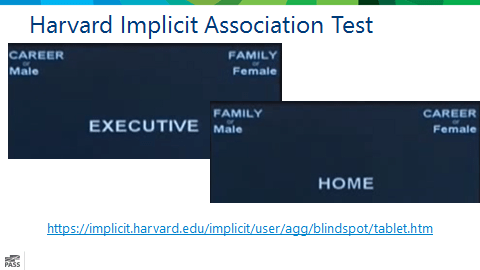
    We’re good people. As good people we don’t want to think we do things that have negative consequences for others. But sometimes our subconscious can fool us. What we intend isn’t always what happens. We think we’re making a totally rational decision based on our conscious values – but subtle, unconscious bias creeps in. Yes, even for good people. For 20+ years folks at Harvard have been using something called the Implicit Association Test (IAT) to help us identify our biases.

    Take this IAT on gender and career – the results may surprise you: https://implicit.harvard.edu/implicit/user/agg/blindspot/tablet.htm

    Watch Alan Alda take the test, it will give you a feel for how it works: https://www.youtube.com/watch?v=2RSVz6VEybk

    image

    Patterns and Categories

    The human brain works with patterns and categories. It’s how we make it through the day. We are bombarded with 100s of thousands of data points every day – we can’t possibly think through each one every time. We unconsciously assign data points, including our perception of people, into buckets. Those buckets have values and characteristics assigned to them that may or may not reflect the individual person we put in that bucket.

    This automatic assignment is called intuitive thinking or system 1 thinking. It’s easy and takes little effort. It serves us well and lets us take on many tasks every day. However, it also sometimes leads us down the path of thinking we’ve chosen the “best” person when we’re really hired someone who meets some set of assumptions.

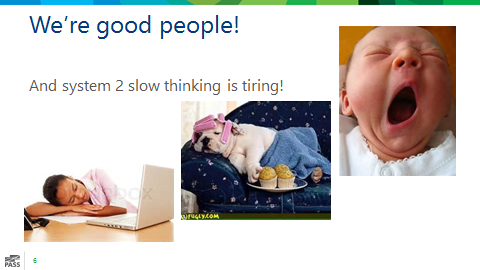
    Sometimes we use slow thinking, or system 2 thinking. It’s rarely a conscious decision, something just makes us take some extra time and we usually don’t even realize it. That’s when we stop to question what we’re doing – maybe we adjust which categories we put someone in or we adjust the category or the values and judgments associated with it. We’re good people but system 2 thinking is tiring and we just can’t do it all the time.

    image

    Diversity Matters

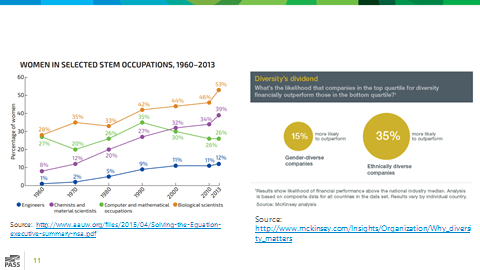
    Why does diversity matter at work? Personally, when we’re on a diverse team we tend to have higher personal and job satisfaction. Diverse teams are interesting and we often learn more. People who don’t feel like they’re the “only one” of something (gender, sexual orientation, race, introvert/extravert, etc.) relax, contribute more, and are more productive. And study after study shows that more diverse teams lead to better products and a better bottom line.

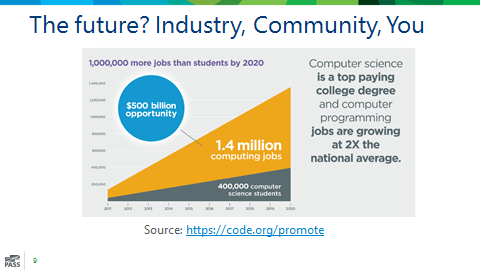
    Companies with women on their boards have higher ROIs, more diverse companies tend to perform above average, and let’s face it – we don’t have enough STEM graduates to fill needed jobs if we don’t encourage a more diverse group of people to enter the field.

    imageimage

    Mind Tricks

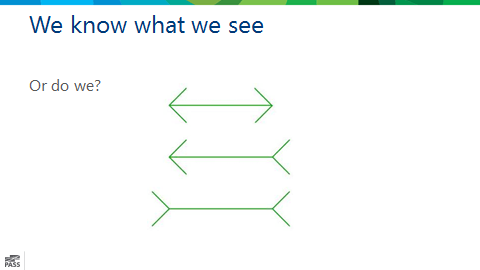
    But we’re good people and we don’t make these snap judgments. We are rational and we always know why we made a decision. Or do we?

    image

    Optical illusions fool us all the time. Even knowing those lines are all the same length, did you have to measure them just to be sure? The same thing happens in our interactions with people. What’s the first thing that comes to mind for single parent, introvert, doctor, CEO, or programmer? That first thing hints at your categories – the categories built up by a lifetime of media saturation filled with type-cast actors.

    image

    Back to the science of bias. Let’s think about resumes. In one study, resumes were handed out to academics who were asked to rate the job candidates for competency, hireability, mentoring, and suggested salary. Some resumes were for John and some for Jennifer. Professors of all genders rated Jennifer 25% less competent and less likely to be hired. They rated John worth about $4000 more. When asked why they gave ratings their justifications sounded rational but…. 4 industry publications was awesome for John and 4 was just not enough for Jennifer. They are good people but they (we!) are at the mercy of their subconscious and years of societal conditioning.

    Moving On

    We’re good people so what do we do?

    Take the IATs – there are many, take at least a couple and understand your unexpected biases. Talk about this with others so we all become comfortable talking about our subtle biases. Work to consciously update your mental categories – seek out images and reminders of people who are different and successful. Now that you know your own categories a bit better, be more mindful about switching to system 2 thinking. Reach out to one person and mentor them. Spend time with someone who makes you uncomfortable. Pay attention to the “firsts” (the first autistic character on Sesame Street, the first black President, the first whatever) and see if that helps you update your mental categories.

    Increase the pipeline. Participate in groups that help kids learn to code. Recruit beyond your normal network, post jobs on diversity sites, and consider non-traditional backgrounds. Join diverse groups that don’t match your own diversity.

    Be careful with words. Is someone bossy or exhibiting leadership? Is someone aggressive or a go-getter? Are they emotional or passionate. You may be surprised how you assign different words for the same behavior in unexpected ways.

    When you post a job, only list something as “required” if it truly is. Women for example tend to only apply if they meet almost all the requirements, men tend to apply if they meet a few. Do you really require Java experience or do you need a good coder who is willing to learn new things? Don’t ask for a specific type of leader, look for someone who can lead in any of many productive ways. Explicitly state that you value a diverse team. And beware of subtle stereotypes – words like best, rock star, action-oriented define a particular picture but may not represent what you’re really looking for.

    When reviewing resumes, have HR take off names, cities, and years. Before you pick up a resume decide on your priorities – does experience or willingness to learn matter more for example? Look for people who fill gaps rather than trying to replicate people you already have. And remember, system 2 thinking is tiring so do this when you’re alert and can take the time to think about what you’re doing.

    For the interviews, have a diverse group participate. Simply looking at picture of or talking about diverse people before starting interviews increases the chance you hire with diversity in mind. Don’t confuse either confidence or “geek cred” with competence. Keep an open mind about different ways of approaching problems – it’s the result that matters.

    Many flowers make a beautiful bouquet – @IsisAnchalee

    Let’s Do It!

    What is your personal pledge today?

    image

    Full slide deck is available at http://smallbitesofbigdata.com/archive/2015/10/26/moving-beyond-unconscious-bias-good-people-matter.aspx